


 Cart
Cart
 sales@molnova.com



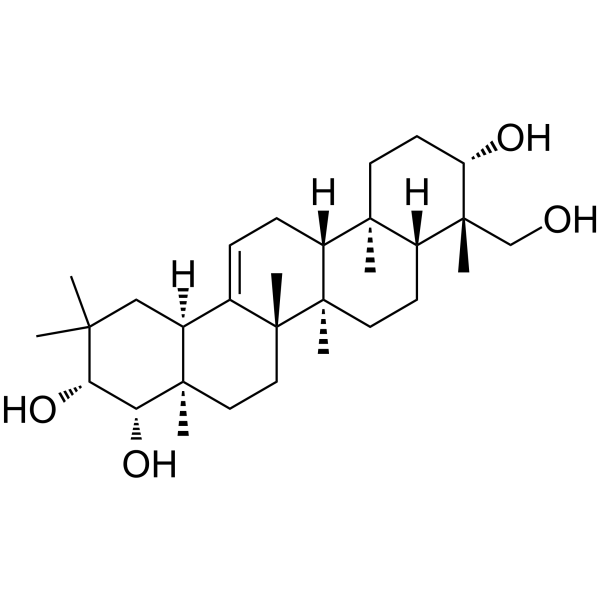
Soyasapogenol A
CAS No. 508-01-0
Soyasapogenol A( —— )
Catalog No. M31460 CAS No. 508-01-0
Soyasapogenol A shows estrogenic and hepatoprotective activities, it directly prevents apoptosis of hepatocytes, and secondly, inhibits the elevation of plasma TNF-α±, which consequently resulted in the prevention of liver damage in the concanavalin A-induced hepatitis model.
Purity : >98% (HPLC)
 COA
Datasheet
HNMR
HPLC
MSDS
Handing Instructions
COA
Datasheet
HNMR
HPLC
MSDS
Handing Instructions
| Size | Price / USD | Stock | Quantity |
| 5MG | 162 | In Stock |


|
| 50MG | Get Quote | In Stock |
|
| 100MG | Get Quote | In Stock |
|
Biological Information
-
Product NameSoyasapogenol A
-
NoteResearch use only, not for human use.
-
Brief DescriptionSoyasapogenol A shows estrogenic and hepatoprotective activities, it directly prevents apoptosis of hepatocytes, and secondly, inhibits the elevation of plasma TNF-α±, which consequently resulted in the prevention of liver damage in the concanavalin A-induced hepatitis model.
-
DescriptionSoyasapogenol A shows estrogenic and hepatoprotective activities, it directly prevents apoptosis of hepatocytes, and secondly, inhibits the elevation of plasma TNF-α±, which consequently resulted in the prevention of liver damage in the concanavalin A-induced hepatitis model.
-
In Vitro——
-
In Vivo——
-
Synonyms——
-
PathwayOthers
-
TargetOther Targets
-
Recptor——
-
Research Area——
-
Indication——
Chemical Information
-
CAS Number508-01-0
-
Formula Weight474.7
-
Molecular FormulaC30H50O4
-
Purity>98% (HPLC)
-
SolubilityIn Vitro:?DMSO : 100 mg/mL (210.65 mM)
-
SMILES——
-
Chemical Name——
Shipping & Storage Information
-
Storage(-20℃)
-
ShippingWith Ice Pack
-
Stability≥ 2 years
Reference
molnova catalog



related products
-
Miraculan
Triacontan-1-ol is an active biochemical.
-
AM-5308
AM-5308 is a kinesin KIF18A inhibitor that can be used to study cancer.
-
Cirsimarin
Cirsimarin is a flavonoid isolated from Microtea debilis. It shows a potent antilipogenic effect and decreases adipose tissue deposition in mice.
